Mammoth Hot Springs and Montana
We drove the 40 or so miles from our campsite to Mammoth Hot Springs. This area is historic--it used to be Fort Yellowstone. It is an antique kind of town. We bought stamps at the post office here & mailed a few post cards. We saw doe elk all over the grounds with their fawns. Rangers were busy doing crowd control on the tourists so the elk could have elbow room (helping elk cross the roads when they wanted to!).
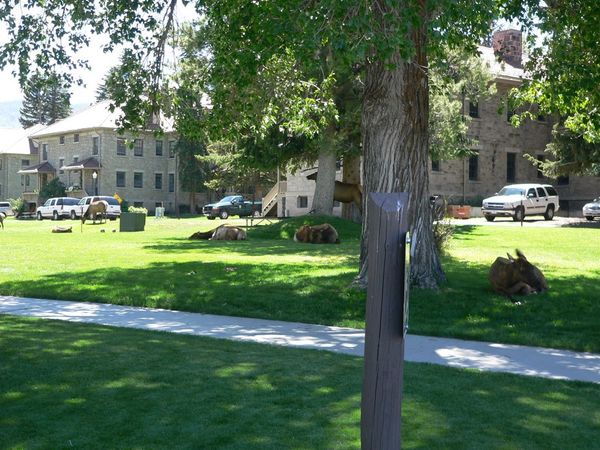
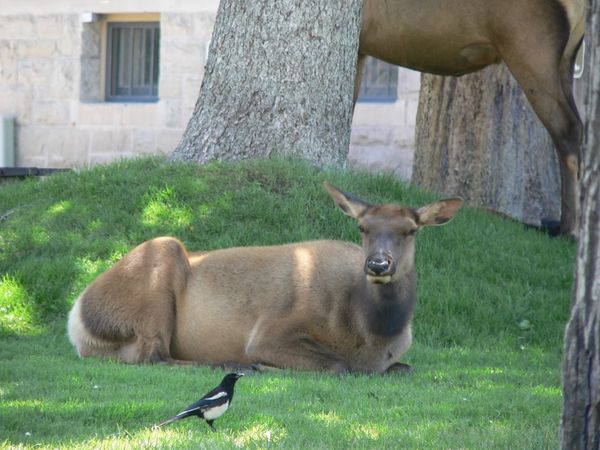
Eric's note: the rangers were protecting both the wildlife and the visitors. I asked the ranger if the does or bulls were more dangerous, considering that there were only does where we were at the time. He said that most would think that the bulls would be the more dangerous, but that the does are equally dangerous especially considering the fawns were with them. If the females feel threatened, they will charge and can cause serious injury. However, bison are worse, and the warnings posted everywhere report that many people are gored each year. The rule is: stay a minimum of 100 yards from bear and 25 yards from everything else. Bear attacks are very uncommon (actually, extremely rare), but just the same, you don't want to tempt a bear to defy the statistics. On the other hand, many animals are killed or injured each year too, mostly by cars. If you want to see the results from a car/moose collision, click here. If you want to see a safety video produced for/by the park service, click here for elk and here for bison. There is a better bison video that they show at one of the visitor's centers, but can't find it right now.
Back to Margaret: We ate lunch while watching all this (doe elk & fawns, rangers, & tourists, not videos) and met a ranger at the front of the visitor center right after lunch who gave an excellent talk on the fires of Yellowstone, how fires were fought, National Park policy on fire-fighting, etc. All the kids sat up front. He took questions at the end and showed John and Ward the rest of what was in his pack after everyone had gone. He was an experienced fire-fighter, but not from the 1988 Yellowstone fires.

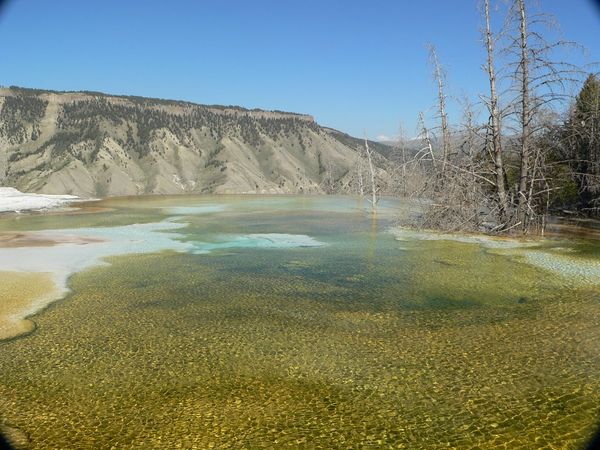
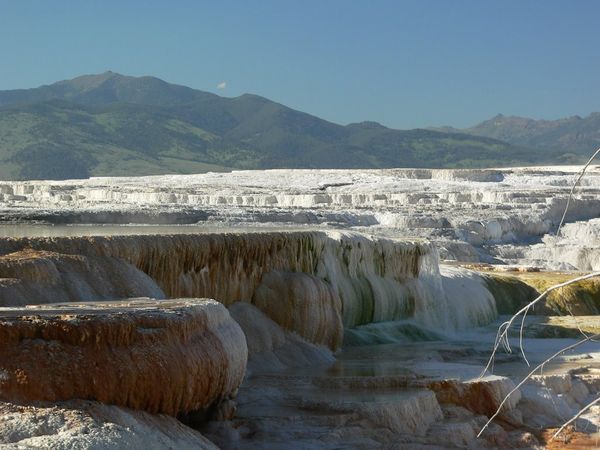
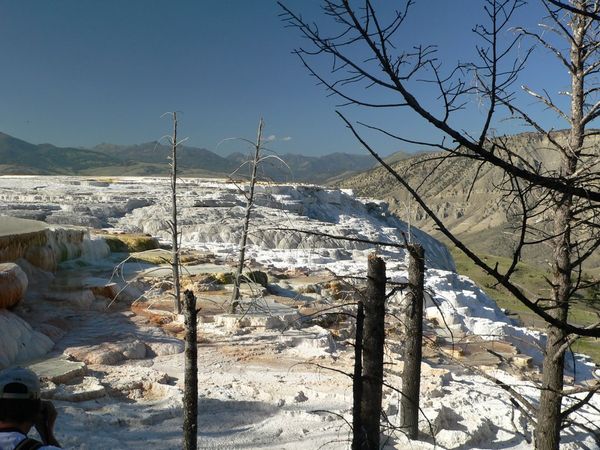
A lot of Mammoth seemed to be "ruins" in that it appears to be deposits from old, now inactive springs. Some of the old drawings that Thomas Moran did were of this area, but much imagination is required to make the connection with what is here now. The Mammoth area is different geologically from the rest of the park in that it consists mostly of springs carrying dissolved minerals (calcium carbonate--other areas of the park are silicon) that are being deposited. As the deposits build up, the flow of the springs shifts--a recipe for constant change. One ranger who had been working summers in the park for 34 years, told us that Mammoth looks almost nothing like it did when he first started, so the changes occur rapidly. One particular area here at Mammoth, canary springs, seems to be very active. Deposits from it are spilling under the walkways which look like they will have to be moved soon. These deposits are killing pine trees in the immediate vicinity as well. We learned that walkways (boardwalks) are moved often in Yellowstone to accommodate shifts in flow and thermal activity.
It was a very warm day, probably high 80s, but very pleasant in the shade. We spent some time in the visitor center. Amos and Ward were both working on their Junior Ranger patches similar to the one Ward earned in the Tetons. This center had lots of mounted animals that Ward liked and exhibits on Moran (early artist) and Jackson (early photographer) of the area. I was wondering at first why the building was so hot. It was sort of steamy inside with all the visitors crowding around looking at the exhibits, but the thought occurred to me that it probably doesn't get this hot except for a few days a year. The building obviously wasn't air-conditioned and they had several fans going. After all, we were only three miles from the Montana border. With that thought in mind, we decided to drive up to Gardiner, MT, just to say we had been to Montana this vacation. There wasn't much to see, just a famous arch that marks the northern entrance to Yellowstone. The town was pretty small and had no cell-phone or internet coverage that we could find.
- Previous: Old Faithful and Surroundings
- Next: Laundry and souvenir shopping